
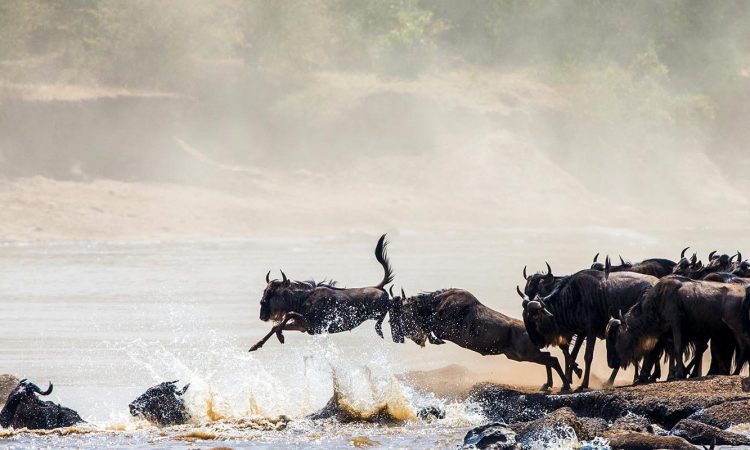
The wildebeest migration is one of the highlights in Serengeti National Park, Tanzania. This is one of the seven wonders of the world that happens annually in different sections of the Serengeti. The most recognized migration is the one of trans destination between the Tanzanian Serengeti and the Kenyan Maasai Mara National Reserve, passing through the Mara River, East of the Grumeti River, through Lobo.
This wildebeest migration event is well recognized in the tourism and hospitality industry globally. It attracts millions of tourists who come to witness the world cup of animals at the stadium of the Mara River, while the Crocodiles act as referees who like giving red cards to the players through preying on the millions of wildebeest and thousands of Zebras which cross the river to the Masai Mara national reserve. The area harbors the highest number of cheetahs in Serengeti National Park near the Gol mountains at the edge of the Northern part of the Ngorongoro conservation area.
Serengeti National Park offers visitors excellent wildlife views throughout the year, especially in areas like Seronera, Grumeti River, and Ndutu. The wildebeest migration in Serengeti occurs in five sectors or regions of the park, each at different times of the year, making Serengeti one of the most popular destinations repeatedly voted as one of Africa’s best.
Below are detailed wildebeest calendar programs that help you to plan and catch up with your wildlife tour of a lifetime:
Southern Serengeti wildebeest Migration

The Southern Serengeti wildebeest Migration starts in late December, with its climax in January, before the wildebeests start coming back in March to the central part of the Serengeti. The Southern wildebeest migration, also known as the calving season, happens in the southern part of the Serengeti and the Northern part of the Ngorongoro conservation area in the Ndutu region.
The wildebeest will cover the areas of Kusini of Serengeti Park and Ndutu of Ngorongoro Conservation Area along the Maswa Game Reserve. Kusini Kopjes is a home for the Cheetahs, leopards, and lions who hide and ambush the grazing wildebeest. The ambushed wildebeests are especially those that move a small distance from the team because they make it easy for the predator to attack.
The wildebeest, together with Zebras, kobs, and other grazers, gather on the Ndutu plains to build up their strength after giving birth to the young ones. It is on record that over one thousand young ones are born on a daily basis, and this attracts more predators as food is plentiful, by taking advantage of the newly born animals.
On this open grass land in Ndutu which is rich of food values and fresh for the young ones to eat, the wildebeest takes the one month of February from this area before March when they start their journey migrating back to Serengeti National Park through Kusini where the survival for the fittest still takes place with various ambushes of the predators along the way in the Acacia woodlands and Kopjes all acting as hiding places for the predators.
When the wildebeest move on, the area is still rich with wildlife, especially fauna depending on the protective microclimates of kopjes, where water collects in basin-like rocks and predators, including lions and jackals, keep vigil from above to see what prey will come to drink. Bizarre aardvark and pangolin feed from towering termite mounds. African hedgehogs, hares, and voles dart around the rocks, whilst gaudy lizards scurry over them.
Southern Serengeti, especially around the Maswa Game Reserve, provides dry-season pasture for the animals. This makes more animals head to that area even if it’s not for calving, like buffalo, impalas, gazelles, among others.
Western Serengeti Wildebeest Migration

This Western wildebeest migration occurs during the rainy season in the Serengeti National Park. That is around April to early June. Large herds of different grazers led by the Wildebeest and followed by other grazing partners like Elands, Zebras, Gazelles, and others mill around the Western Corridors of Serengeti south of the Grumeti River.
This is one of the deadliest migrations in Serengeti due to the high concentration of predators, both in water (in the Grumeti River with giant crocodiles) and on land, where grazers need to escape from the hands of these predators, but hundreds lose their lives during this migration compared to any other migration in the Serengeti.
The Western Serengeti safaris take you beneath an infinite sky of the endless plains of the Serengeti as you watch this drama happening live. Some permanent residents of the wildebeest population do not migrate but always live around the seasonal Mbalageti River. The Mbalageti River runs dry during the dry season, but before that, the river supports more animals in the area.
More beautiful and rare wildlife around the Grumeti River, like the Black and white colobus monkey, patas monkey, olive baboon, impala, topi, waterbuck, wildebeest, antelopes, and others. During the night game-spotting drives in the private wilderness, look for elusive leopards or nocturnal porcupines, aardvarks, honey badgers, and bat-eared foxes.
Northern Serengeti wildebeest migration
The Northern Serengeti Wildebeest migration is the most famous and is counted as one of the seven wonders of animals on earth. This wildebeest migration takes place in the extreme North of Serengeti National Park around the Lamai Triangle, and it’s the largest and most massive wildebeest migration. The migration happens from July to September as the wildebeest cross the Mara River to the Maasai Mara National Reserve of Kenya, passing through the Serengeti-Maasai Mara ecosystem.

The Northern wildebeest migration is more dramatic, seeing wildebeests and other grazers throw themselves into the water amidst the larger Nile crocodiles in the water. This wildebeest migration is so interesting that humans cannot tell the exact date of the migration, but fellow animals, especially the predators, can camp there in time, just waiting for the great opportunity to start.
Every wildebeest has a dream to cross and survive, yet the crocodiles also count on the animals for their dinner and lunch, hence making everything strange as they have to go for the survival of the fittest. The high cliffs of the rift valley escarpments make the river deep and not easy to make a U-turn. Once you’ve entered the river, there’s no looking back. Other animals to see during the northern wildebeest migration are the elusive Leopards, hippos, hyrax, mongoose, and others.
In October, the wildebeest start to return to the Serengeti area, hence making the Mara Serengeti ecosystem busy. One can follow the full wildebeest migration by visiting Serengeti in July and then returning to Maasai Mara in October, and this will give one a full episode of the migration.
Wildebeest Migration Cycle & Map

The Wildebeest migration of Tanzania is a worldwide event that is recognized by every traveller who wishes to see it when he or she travels to Tanzania. Counted as one of the seven wonders of the world, the wildebeest migration takes the tourism experience to another level, not just seeing lazy grazing animals, but action-packed movements where every wildebeest has to be careful and defensive during the movement.
Commonly, the strong male wildebeest leads the large herds of fellow wildebeest mixed with other grazers in the team; they plan their route by gathering together before they start their journey. It takes the animals a few days to plan and start their movement towards the targeted area slowly, depending on the season of the year. If it’s in July to September, then they move to the Northern Serengeti as they prepare to cross the Mara River to Kenya’s greatest reserve, the Maasai Mara.
The circle of Wildebeest migration is circular, moving to occur almost throughout the year, that is, they start from Serengeti Seronera area as their focal point, depending on the time of the year, either to the South to Ndutu in Ngorongoro or to the North to Maasai Mara in Kenya, which involves crossing River Mara, it can also be to the West of Serengeti in Grumeti River.
The wildebeest migration covers three destinations: the Ngorongoro Conservation Area, the Serengeti National Park, and the Maasai Mara National Reserve. The wildebeest rotate within these destinations from one area to another as they look for green pastures and water. The calving season takes them to the Northern Ngorongoro during the rainy season.
Serengeti to Maasai Mara National Reserve and back to Serengeti Wildebeest migration
This wildebeest migration occurs during the dry season from July to September. The wildebeest migrates to the Maasai Mara National Reserve from the Serengeti National Park, the event happens annually across the two countries of Tanzania and Kenya, and in October to November, the wildebeest starts making their journey back to the Serengeti, crossing the Mara River once again.
Many die while crossing from Serengeti to Maasai Mara, yet again, another death toll as thousands still lose their lives before landing back in Serengeti once again. Their journey is always to and from the Serengeti. The wildebeest goes to the Maasai Mara to search for green pastures, then comes back when the short rains start again on the Serengeti side, which is in October.
Kusini (Serengeti) to Ndutu (Ngorongoro Conservation Area) and back, Wildebeest migration
The wildebeest move from Kusini in Serengeti down to Ndutu in Ngorongoro. The movements always start from January to February, and it’s mostly the female wildebeest that lead the move as they go there to give birth. This migration is called calving season and is very special to the wildebeest as they go for celebrations as they welcome the newborn calves.
All the above migrations happen from Serengeti and back to Serengeti, where the wildebeest spend much of the time of the year.